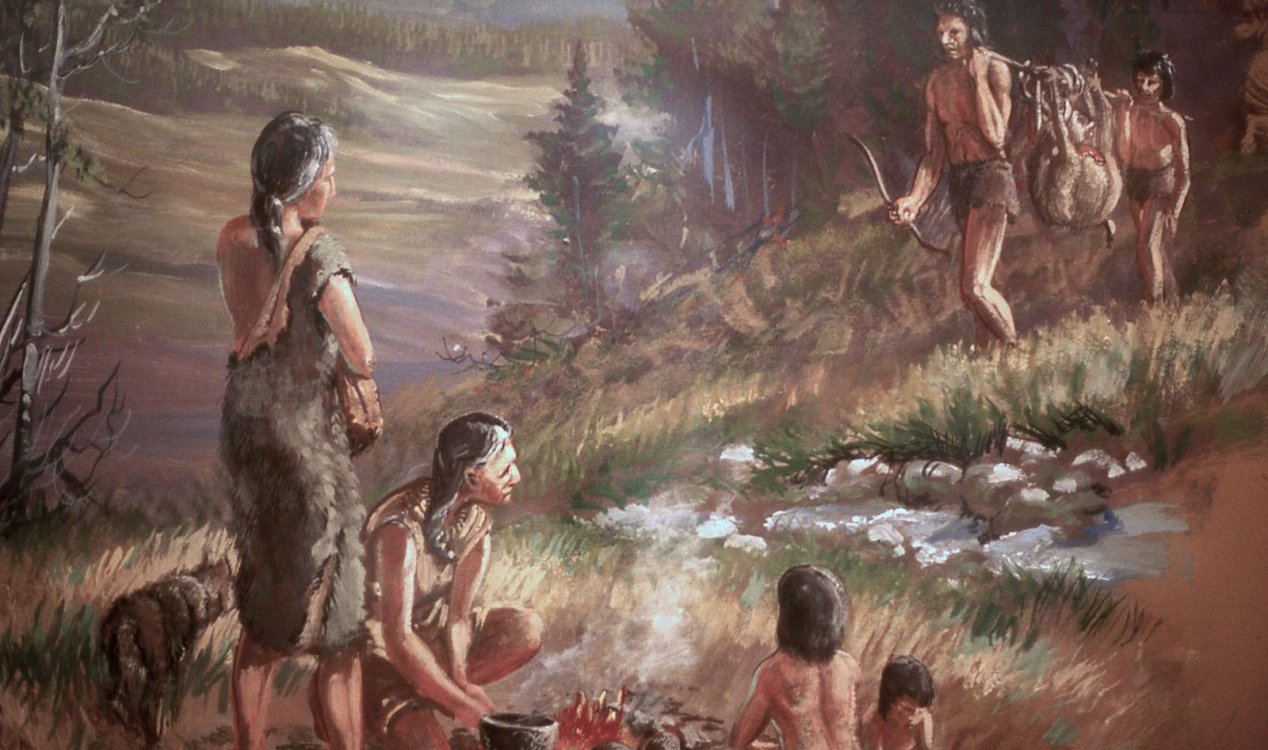
A recent archaeological discovery is challenging long-held beliefs about the relationship between early humans and Neanderthals, suggesting the two species may have worked together far more closely than previously thought.
Excavations at Tinshemet Cave in Israel have uncovered remarkable findings, including some of the first mid-Middle Paleolithic burials discovered in over 50 years. The site is now offering rare insight into how ancient populations lived, interacted, and honored their dead.
What stands out most, however, is the evidence pointing to direct interaction between Neanderthals and early modern humans. Researchers believe the two groups didn’t simply share the same environment — they exchanged knowledge, behaviors, and possibly even cultural practices.
A Shared Culture?
According to the study, both groups appear to have engaged in similar burial rituals, including the use of ochre — a natural pigment often associated with symbolic or ceremonial practices. This suggests a level of shared understanding and communication that goes beyond simple coexistence.
There are also indications that technologies and social behaviors may have been exchanged, pointing to a more complex relationship between the two species.
This challenges the older theory that humans and Neanderthals largely avoided each other, instead painting a picture of cooperation and mutual influence.
Rethinking Human History
Researchers, including Yossi Zaidner from the Hebrew University of Jerusalem, believe these interactions may have played a key role in driving early innovation and cultural development.
The discoveries suggest that collaboration — rather than isolation — could have been a major factor in how human societies evolved.
As excavations continue, scientists hope to uncover even more details about how these two species lived side by side around 110,000 years ago.
One thing is becoming increasingly clear:
The story of human evolution may be far more connected — and far more complex — than we once believed.
About The Author