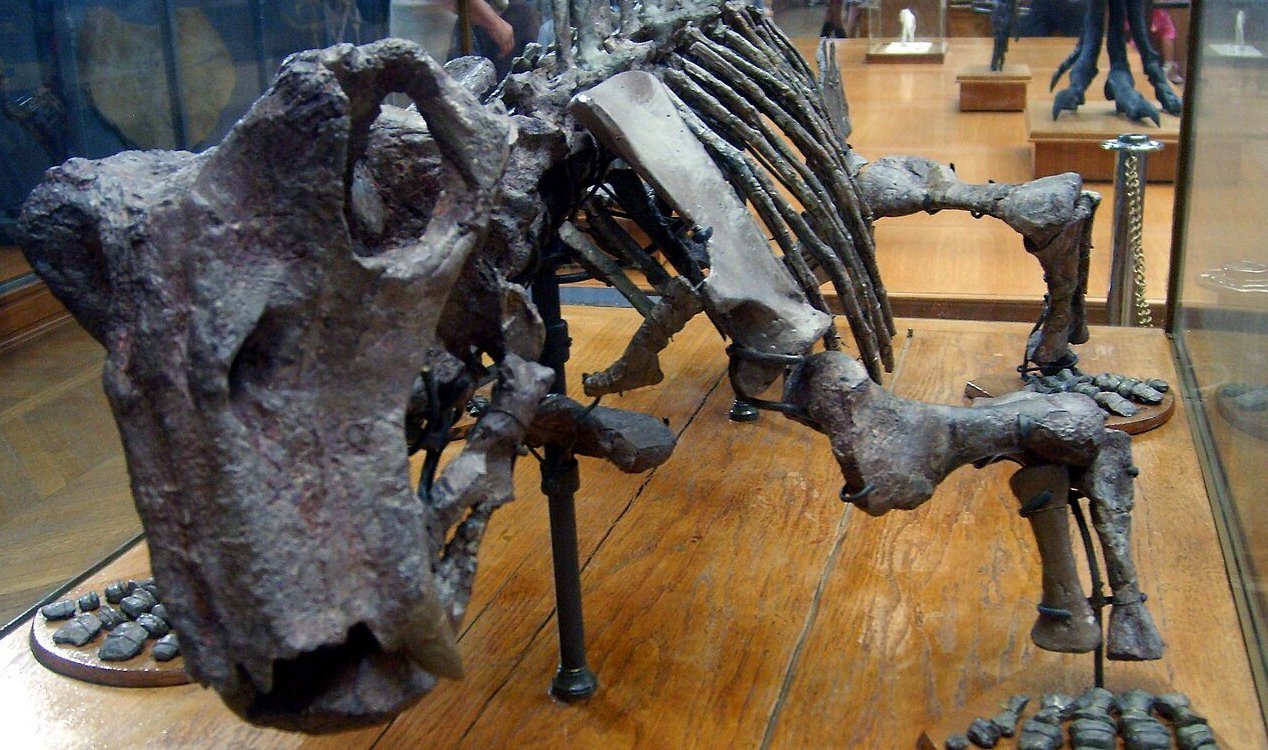
A newly analyzed fossil has provided surprising insight into how some of the earliest relatives of mammals may have reproduced, suggesting that they laid eggs rather than giving birth to live young.
Roughly 250 million years ago, following one of the most devastating mass extinction events in Earth’s history, a resilient creature known as Lystrosaurus managed to survive in extremely harsh conditions. This small, plant-eating animal lived in an environment marked by intense heat, drought, and unpredictable climate changes — yet it thrived while many other species disappeared.
What has now captured the attention of scientists is evidence linked to its reproduction. Researchers have identified what appears to be a fossilized egg associated with Lystrosaurus, offering strong support for the idea that these early mammal ancestors reproduced by laying eggs.
Such findings are extremely rare, largely because these eggs were likely soft-shelled and did not preserve easily over time. Interestingly, the egg itself was larger than expected for an animal of this size, which may have helped it survive in dry, arid conditions.
Further analysis also suggests that the egg contained a significant amount of yolk, meaning the developing embryo could have relied on its internal resources rather than depending on the mother after hatching.
This discovery helps fill a long-standing gap in understanding how early mammal-like creatures reproduced and provides a clearer picture of the evolutionary transition that eventually led to modern mammals.
About The Author