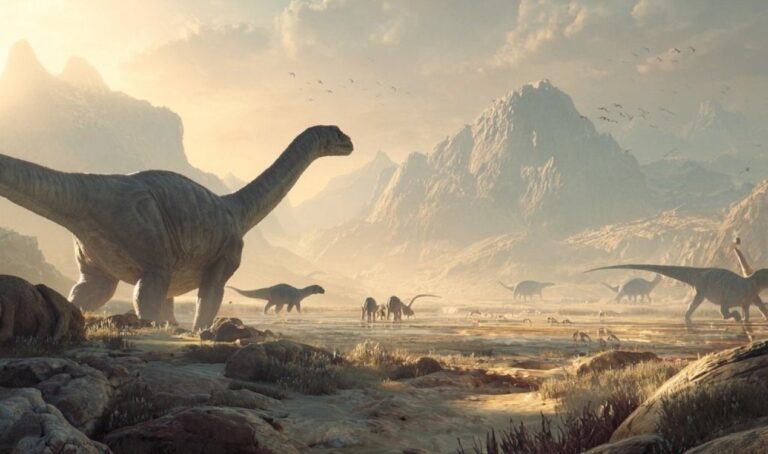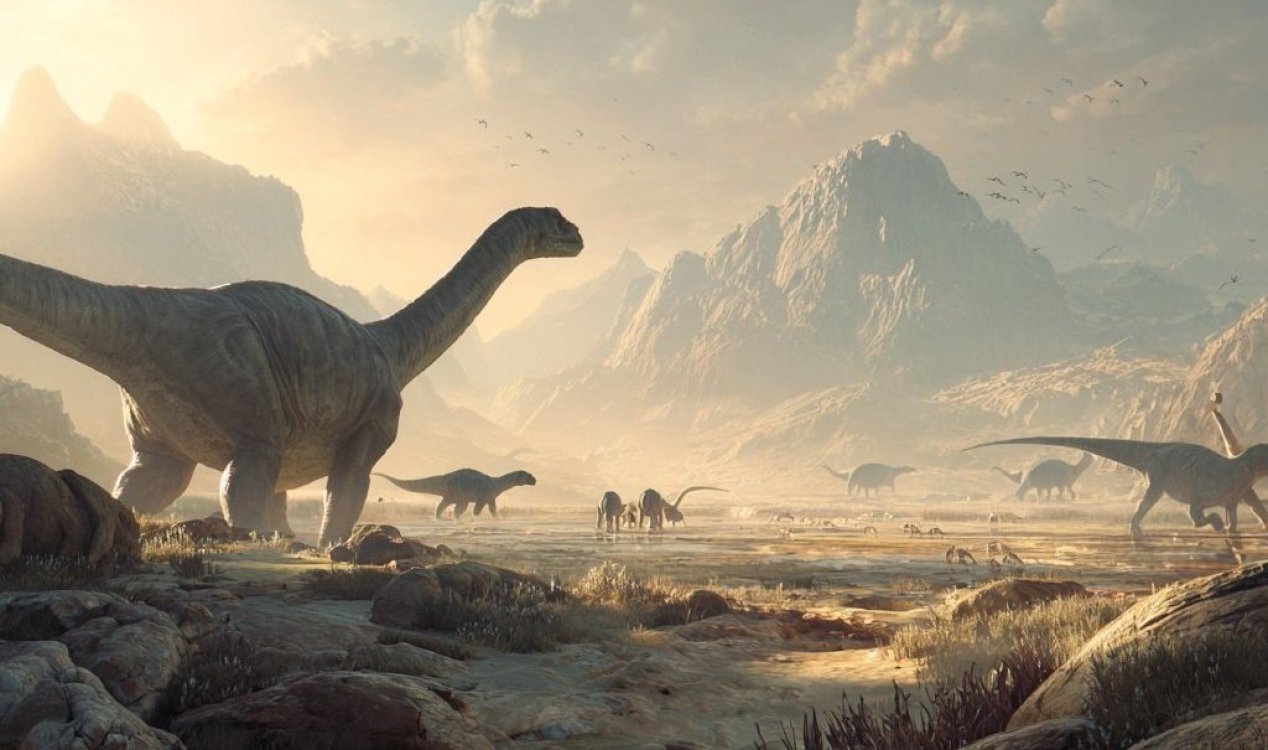
A potentially extraordinary discovery in Brazil could offer scientists a rare glimpse into the biological makeup of dinosaurs, after researchers reported finding structures resembling red blood cells inside fossilized bones dating back approximately 115 million years.
The discovery has drawn comparisons to the science-fiction concept popularized by Jurassic Park, where dinosaur DNA was recovered from ancient mosquitoes preserved in amber. Although scientists have never successfully recovered usable dinosaur DNA from such specimens, this latest finding could provide a new avenue for investigating ancient biological material.
Researchers examining fossilized remains of an Aratasaurus reportedly identified tiny, rounded structures resembling red blood cells using electron microscopy. The structures appear to contain chemical traces associated with heme, a component closely linked to blood and responsible for carrying oxygen in living organisms.
The discovery is particularly remarkable because biological tissues are generally expected to break down over millions of years, making the preservation of such structures extremely unlikely. Scientists have long struggled to identify convincing evidence of preserved blood-related material in dinosaur fossils.
Research leader Professor Kliti Grice of Curtin University described the findings as a molecular and mineralogical remnant of the dinosaur’s original biology, suggesting that traces of ancient biological chemistry may survive far longer than previously anticipated.
Researchers say that fossilized red blood cell-like structures with chemical signatures associated with heme have not previously been identified in this manner within dinosaur remains, potentially making the discovery unprecedented.
However, further analysis is still needed to confirm exactly what the structures represent and whether they genuinely originated from the dinosaur’s blood.
If the findings withstand additional scientific scrutiny, they could represent a major breakthrough in paleontology, opening new possibilities for studying the biology of creatures that disappeared from Earth millions of years ago.
About The Author