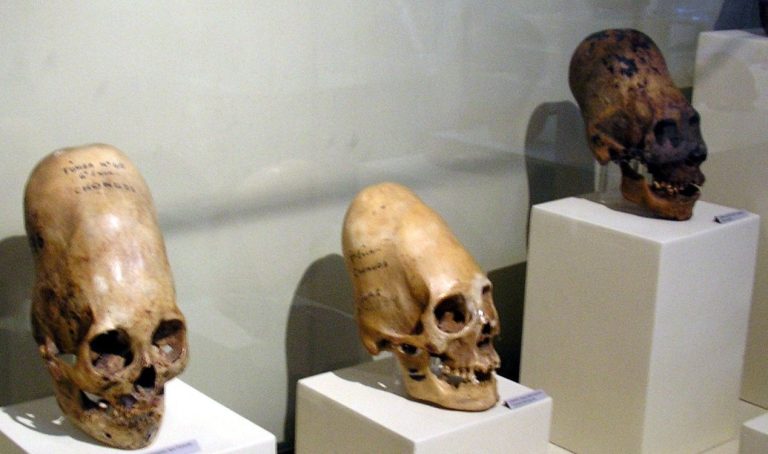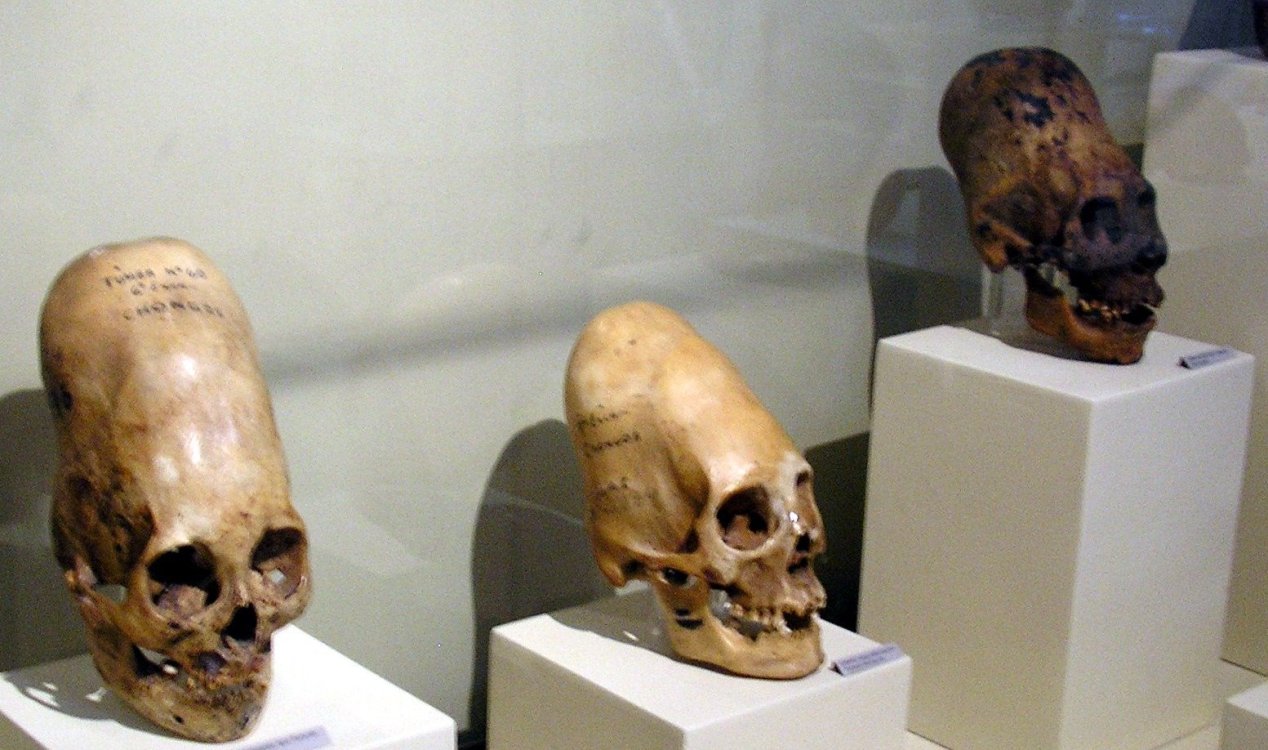
For more than a century, a collection of unusual skulls discovered in Peru has fueled debate among archaeologists, researchers, and mystery enthusiasts alike.
Known as the Paracas skulls, these ancient remains are famous for their dramatically elongated head shapes, a feature that has led to countless theories about their origin. Most mainstream researchers believe the skulls are the result of intentional cranial modification — a practice in which a child’s head is carefully shaped over time using bindings or boards during infancy.
However, not everyone accepts this explanation.
Over the years, some researchers and alternative theorists have argued that the skulls may represent something far more unusual, suggesting they could belong to an unknown human population or even be linked to claims of extraterrestrial contact in the distant past.
The mystery has persisted largely because scientific studies have struggled to provide definitive answers.
In a recent attempt to learn more, a team of researchers sought to extract genetic material from the skulls’ teeth, which are often among the best-preserved sources of ancient DNA. The hope was that modern testing techniques would finally reveal more about the individuals behind the mysterious remains.
Unfortunately, the effort produced disappointing results.
While traces of DNA were recovered, the quantity was too small and too degraded to provide meaningful genetic information. Researchers now believe that centuries of environmental exposure may have destroyed much of the remaining biological material.
As a result, one of archaeology’s most intriguing mysteries remains unsolved.
Unless future technology allows scientists to recover usable DNA from the specimens, the true story behind the Paracas skulls may remain hidden forever, continuing to inspire both scientific curiosity and speculation for years to come.
About The Author